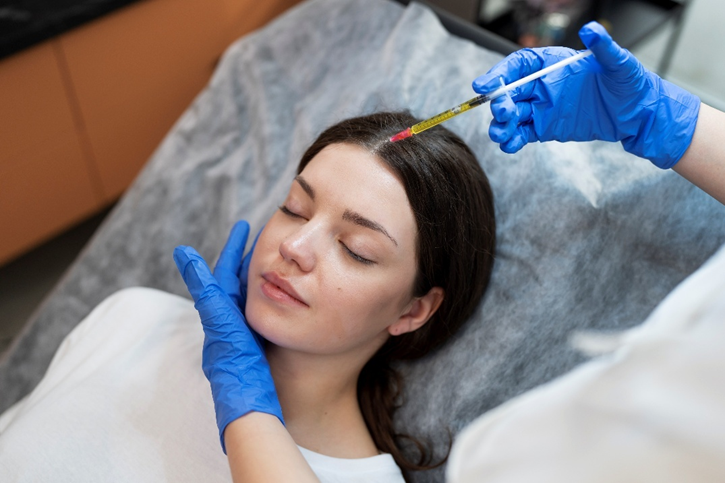
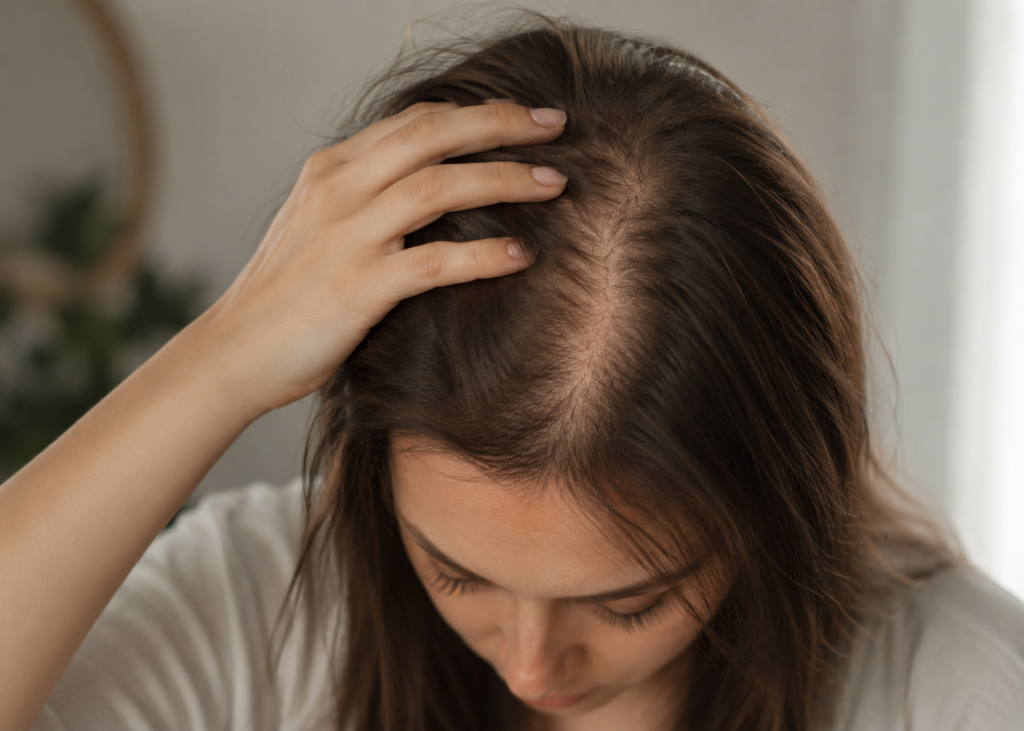
That moment of running your fingers through your hair and noticing more scalp than you used to you are not imagining it, and you are not alone.
You are standing in the shower, watching hair collect around the drain. Or running a comb through your part and noticing it looks… wider than it did six months ago. You hold up a ponytail that used to be thick and full, and now wraps around twice where it used to wrap once.
If that sounds familiar, you are in the company of roughly 40 million women in the United States who experience noticeable hair thinning at some point in their lives. And yet somehow almost every article, advertisement, and clinical study on hair loss centers on men.
Women’s hair loss is different. The causes are different. The patterns are different. The emotional weight of it is different. And critically, the treatments that work best are different too. Understanding those differences is the first step toward actually doing something effective about it.
At Versailles Health & Wellness in the Dallas Rockwall area, we specialize in hair restoration for women not as an afterthought to a male-focused program, but as a dedicated clinical focus. This guide covers what’s really happening, why it’s happening to you specifically, and what modern treatment options can realistically achieve.
Quick Facts About Female Hair Loss 40 million U.S. women affected · Most cases are treatable when caught early · Hair loss in women is rarely ‘just genetics’ · Hormones, nutrition, and stress all play major roles · Multiple effective non-surgical treatments now exist specifically for women
The Hair Loss Nobody Talks About: Why Women Are Underdiagnosed
Walk into almost any pharmacy and you will find hair loss products marketed almost exclusively to men. The before-and-after photos show men. The clinical language Norwood scale, DHT, male-pattern baldness is male. This isn’t just a marketing problem; it has historically reflected a genuine gap in clinical research.
The result is that millions of women spend years cycling through shampoos and supplements before anyone identifies what’s actually happening. Some are told it’s “just stress” or told their labs are “technically normal.” They leave doctor’s appointments feeling dismissed, when in fact female hair loss has multiple identifiable, treatable causes causes that a specialist trained in women’s hair loss can pinpoint and address directly.
“Women with hair loss are twice as likely to report depression and social anxiety as women without yet they receive specialist referrals at a fraction of the rate of male hair loss patients.” – Journal of the American Academy of Dermatology, 2022
The first step toward effective treatment is getting the right diagnosis. That means not just a blood test, but a proper trichoscopy examination, hormonal panel, nutritional workup, and detailed history the kind of assessment our team at Versailles Health & Wellness conducts for every female patient.
The Real Causes of Hair Loss in Women
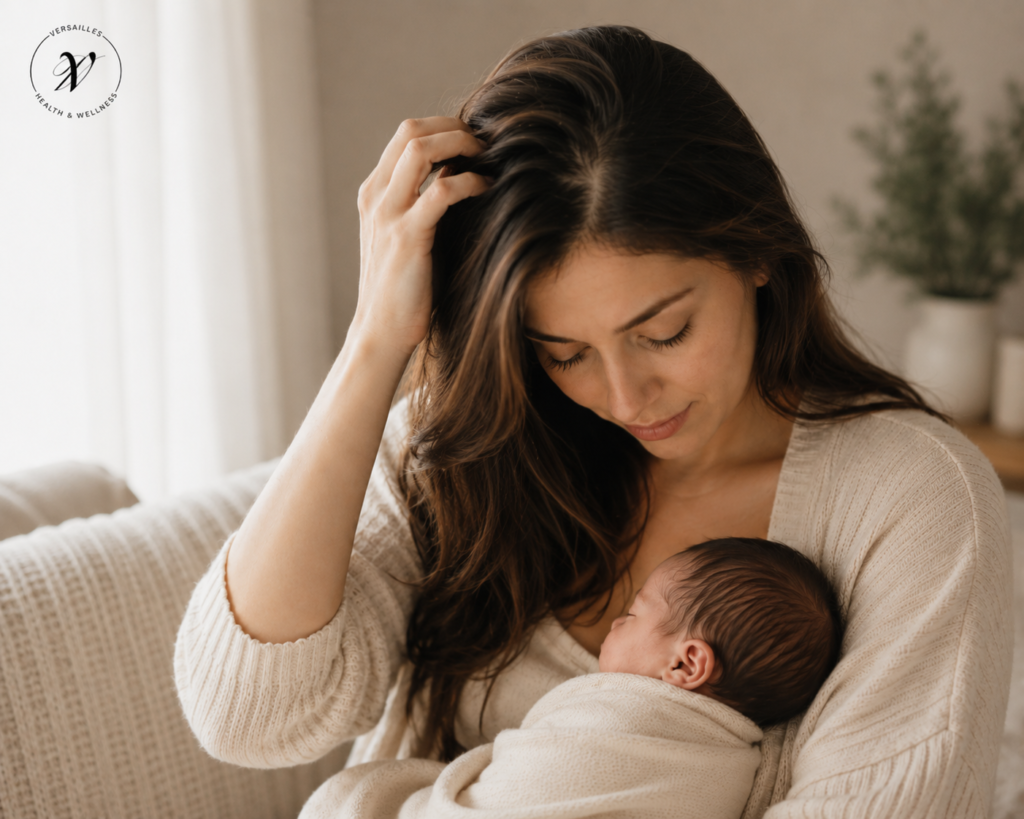
Unlike male-pattern baldness which follows a fairly predictable genetic and hormonal script female hair loss typically involves multiple overlapping causes. Here are the most common ones, and how each affects your hair differently:
1. Postpartum Hair Loss Rockwall Texas
During pregnancy, elevated estrogen keeps hairs in their active growth phase far longer than usual which is why many women enjoy their thickest hair while pregnant. After delivery, estrogen levels drop sharply. All those hairs that were “held” during pregnancy simultaneously enter their resting phase and shed, typically 3–4 months postpartum, often lasting 3–6 months.
This is not permanent but it can be alarming, and recovery can be slow without targeted support. Treatments that accelerate follicle re-entry into the growth phase (like LLLT and PRP) can meaningfully shorten the shedding period and restore density faster.
2. PCOS Hair Loss Treatment Dallas TX
Polycystic ovary syndrome affects 1 in 10 women of reproductive age and is one of the most common and most commonly missed causes of female hair loss. PCOS elevates androgen levels (particularly testosterone and DHT), which miniaturize hair follicles over time, producing progressively finer strands and a widening part.
What makes PCOS-related hair loss tricky is that it often presents alongside other symptoms irregular periods, acne, weight changes but hair loss can sometimes be the first visible sign. The good news: targeted treatment that addresses both the hormonal and vascular components of PCOS-driven thinning can produce real, lasting improvement.
3.Menopausal Hair Thinning Treatment Dallas
Estrogen and progesterone do more than regulate reproductive cycles they also protect hair follicles. As these hormones decline during perimenopause and menopause, the relative dominance of androgens increases, and follicles become more susceptible to DHT-driven miniaturization. Many women first notice hair changes in their mid-40s, often years before menopause is officially diagnosed.
Menopausal hair loss tends to be diffuse spread across the scalp rather than concentrated at the temples or crown which is why it can be dismissed as normal aging rather than identified as a treatable condition.
4. Nutritional Deficiency Hair Loss
This is the cause most often missed in standard care. Hair follicles have some of the highest metabolic demands of any cell type in the body, requiring sustained levels of iron (ferritin), zinc, vitamin D, vitamin B12, and essential amino acids. When any of these dip even within the “normal” lab range hair production is one of the first functions the body deprioritizes.
Women are disproportionately affected due to menstrual blood loss, restrictive diets, and the nutritional demands of pregnancy and breastfeeding. A proper ferritin level for hair health, for example, is above 70 ng/mL far higher than the standard lab threshold of 12 ng/mL that many doctors use to declare a patient “normal.”
5. Stress-Driven Shedding (Telogen Effluvium)
Significant physical or emotional stress surgery, illness, grief, extreme weight loss, burnout can push a large number of follicles simultaneously into the resting phase. The resulting shed typically appears 2–3 months after the triggering event, which is why women often struggle to connect cause and effect. The good news: telogen effluvium is among the most responsive conditions to treatment when addressed early.
Why Over-the-Counter Products Usually Don’t Work
If you have spent money on thickening shampoos, biotin supplements, scalp serums, or hair vitamins, you are not alone and you were not foolish for trying them. But here is the honest truth: no topical product can reach a miniaturized hair follicle. Shampoos wash off. Biotin is excreted in urine if you are not deficient. Thickening sprays coat existing hairs temporarily but do nothing to the follicle cycle.
The only interventions proven to actually change what happens at the follicle level are those that either alter hormone signaling, improve scalp blood circulation, deliver growth factors directly to follicle tissue, or address the specific nutritional deficiency driving loss. Everything else is managing appearance, not treating the cause.
What the Research Says About OTC Hair Products: A 2022 review in Dermatology and Therapy found no peer-reviewed evidence that any commercially available hair supplement produced statistically significant improvements in female hair density when studied in double-blind placebo-controlled trials unless the participant had a confirmed underlying deficiency.
What Actually Works: Evidence-Based Treatments for Women
The treatments below each have genuine clinical evidence behind them for female hair loss specifically. Many work best in combination, because they target different aspects of the same underlying problem:
| Treatment | How It Helps Women | Timeline |
| Low-Level Laser Therapy (LLLT) | Restores scalp microcirculation, energizes follicular metabolism, reduces perifollicular inflammation without hormones or drugs | Reduced shedding: 8–12 wks; Density gains: 4–6 mo |
| PRP (Platelet-Rich Plasma) | Delivers concentrated growth factors directly to follicles; triggers anagen re-entry in dormant follicles | Visible improvement: 3–4 sessions over 4–6 mo |
| Exosome Therapy | Advanced cell-signaling molecules reprogram follicle behavior; highly effective for PCOS and postpartum cases | Results visible from 3–4 months; cumulative effect |
| Topical Minoxidil 2–5% | Extends anagen phase; proven in FDA trials for female AGA | Requires 4+ months consistent use; ongoing maintenance |
| Nutritional Repletion | Corrects ferritin, zinc, vitamin D, B12 deficiencies that directly impair follicle cycling | Variable; often 3–6 months once target levels reached |
| Hormonal Support | Addresses underlying PCOS or menopausal hormone shifts driving androgen-excess thinning | Ongoing; works best combined with local follicle treatments |
At Versailles Health & Wellness, we build individualized combination protocols because women’s hair loss rarely has a single cause, and the most effective treatment plans address multiple pathways simultaneously.
Why Laser Therapy Is a Game-Changer Specifically for Women
Of all the non-surgical options, low-level laser therapy (LLLT) or photobiomodulation holds a special position in women’s hair restoration because it addresses the vascular and cellular roots of hair loss without interacting with hormones at all. This makes it safe and appropriate across virtually all female hair loss types, including during postpartum recovery and for women with hormonally complex conditions like PCOS.
- For postpartum hair loss: LLLT accelerates the return of follicles from telogen (resting) back to anagen (growth) by restoring scalp blood flow and boosting cellular energy (ATP) in follicle cells.
- For PCOS-related thinning: LLLT reduces the perifollicular inflammation and vascular constriction that DHT causes addressing the local scalp consequences of hormonal imbalance that systemic treatments don’t reach.
- For menopausal thinning: As estrogen-supported follicle protection declines, LLLT compensates by improving scalp microcirculation and stimulating VEGF (Vascular Endothelial Growth Factor) to maintain capillary density around follicles.
- For stress-triggered shedding: LLLT reduces the inflammatory signaling cascade that pushes follicles into telogen, helping interrupt the cycle of stress-driven hair loss.
- As post-PRP maintenance: LLLT between PRP sessions maintains the vascular environment that makes PRP growth factors effective, extending and deepening treatment results.
What Real Results Look Like And How Long They Take
| Timeframe | What to Expect |
| Weeks 1–6 | Reduced daily shedding is usually the first change. Scalp may feel less tight. No visible new growth yet. |
| Months 2–4 | Vellus (fine, colorless) regrowth appears in previously thin areas. Part begins to look less wide. |
| Months 4–7 | Terminal hair thickens and new strands become visible. Ponytail feels fuller. Photographic comparison shows clear improvement. |
| Months 6–12 | Peak density gains for most patients. Best outcomes in combination-therapy cases (LLLT + PRP or exosomes). |
| 12 months+ | Maintenance phase: 1–2 sessions per week. Without ongoing support, some regression is typical over 12–18 months. |
Every woman’s hair loss pattern is different, and results vary based on how long hair loss has been progressing, which underlying causes are present, and how consistently treatment is followed. That’s exactly why a personalized assessment not a generic protocol is where every effective treatment plan has to start.
Your Questions, Answered
Is female hair loss permanent?
In the majority of cases, no especially when addressed early. The exception is hair loss that has persisted for many years without treatment, which can lead to follicle atrophy that is difficult to reverse. The sooner an accurate diagnosis is made and treatment begins, the better the prognosis.
Can I treat hair loss while breastfeeding?
LLLT is safe during breastfeeding it is non-invasive, non-pharmacological, and has no systemic absorption. Some other treatments (like finasteride) are contraindicated during breastfeeding. A specialist consultation ensures you receive an effective protocol that is appropriate for your current stage. Contact Versailles Health & Wellness to discuss your specific situation.
Why does my hair loss seem worse after I stopped hormonal birth control?
Hormonal contraceptives containing estrogen can suppress androgen-driven hair loss while you take them. When you stop, androgen levels rise relative to estrogen, and a shedding episode that was “on hold” can appear within 2–3 months of discontinuation. This is often mistaken for a side effect of stopping the pill, when in fact it reveals an underlying susceptibility that was being masked.
Does hair loss in women skip generations or run in families?
Genetic predisposition exists for female-pattern hair loss, but it is polygenic (influenced by many genes from both parents) and much less deterministic than in men. Environmental factors nutrition, stress, hormonal health play a proportionally larger role in women, which means genetic predisposition is often significantly modifiable with the right intervention.
How do I know which treatment is right for me?
The honest answer is: you need a proper diagnosis first. The right treatment for postpartum telogen effluvium is different from the right treatment for PCOS-related miniaturization, which is different again from menopausal diffuse thinning. A trained hair restoration specialist will examine your scalp, review your history, and recommend a protocol matched to your specific biology not a one-size-fits-all approach.
Book Your Women Hair Loss Treatment in Dallas TX Today
If there is one thing to take away from this guide, it is this: your hair loss is not inevitable, not untreatable, and not something you simply have to accept. It has causes. Those causes are identifiable. And in 2025, the tools available to address them from laser therapy and PRP to targeted nutritional protocols and exosome treatment are more effective than at any point in the history of hair medicine.
What has not changed is the importance of starting with an accurate, personalized assessment. Every effective treatment journey begins with understanding exactly what is driving your hair loss not a generic template.
The team at Versailles Health & Wellness in Rockwall–Dallas, Texas brings a specialized, woman-centered approach to hair restoration. We do not offer a single treatment and hope it works. We assess your unique hormonal profile, follicle health, nutritional status, and lifestyle and we build a protocol that makes sense for your biology, your schedule, and your goals.
Book Your Free Consultation → Women’s hair restoration at Versailles Health & Wellness, Rockwall–Dallas TX. Schedule your personalized assessment here.
Disclaimer: This article is written entirely by the Versailles Health & Wellness editorial team and represents 100% original content. All statistics are sourced from peer-reviewed published research. This content is for educational purposes only and does not constitute medical advice. Please consult a licensed dermatologist or trichologist for a personalized treatment plan.
© 2025 Versailles Health & Wellness · Women’s Hair Restoration · Rockwall–Dallas, TX · All rights reserved.