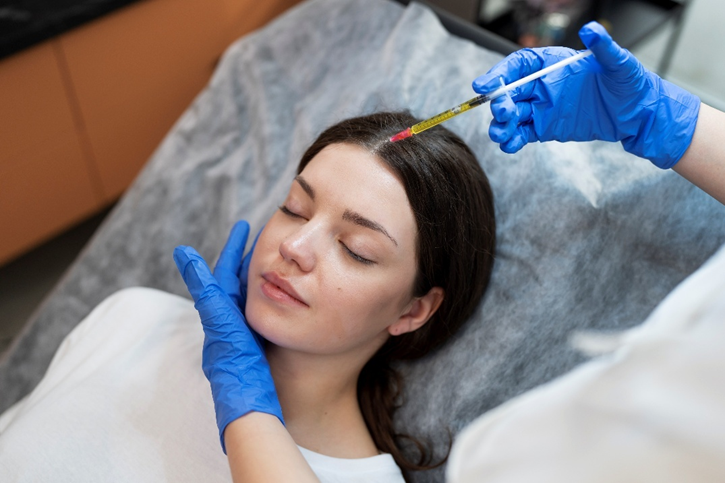
How Laser Therapy Improves Scalp Circulation for Hair Growth

Noticing early signs of hair thinning? Scalp laser therapy targets the root cause poor blood circulation to reactivate dormant hair follicles naturally.
Every morning, millions of people look in the mirror and notice something that wasn’t there a year ago a wider part, a thinner crown, or strands that keep collecting in the shower drain. Hair loss is not a vanity problem; for most people, it chips away at confidence slowly and quietly. But here’s what many don’t realize: the majority of hair loss begins not in the follicle itself, but in the blood vessels that feed it.
When your scalp’s circulation weakens, follicles starve. They miniaturize, produce progressively thinner strands, and eventually go dormant. Restoring that blood flow precisely and non-invasively is exactly what low-level laser therapy (LLLT), also known as photobiomodulation, is designed to do.
This guide explains, in plain language, the complete science behind how laser therapy reactivates scalp microcirculation, what clinical research actually confirms, and what to realistically expect. At Versailles Health & Wellness in Rockwall–Dallas, TX, we integrate LLLT with PRP, exosome therapy, and personalized nutrition plans to deliver hair restoration results that last.
Quick Facts Laser Therapy & Hair Growth FDA-cleared for both men and women · Zero systemic side effects · Works via photobiomodulation, not heat · Average +39% hair count gain at 26 weeks · Can be combined with minoxidil, PRP, finasteride
What Is Low-Level Laser Therapy (LLLT)?
Low-level laser therapy sometimes called cold laser therapy, red light therapy, or photobiomodulation (PBM) uses specific wavelengths of non-ionizing light, typically 630–680 nm (red) or 800–850 nm (near-infrared), to penetrate scalp tissue without generating heat or causing cellular damage.
Unlike the high-energy lasers used in cosmetic procedures or surgery, LLLT devices operate at power densities low enough to interact with biological molecules without ablating or burning them. The therapeutic effect is entirely photobiological: light energy is converted directly into cellular energy through a process that has been studied in peer-reviewed literature for over three decades.
“Low-level laser therapy produces clinically meaningful improvements in hair density and follicle health through a well-characterized photochemical cascade and unlike many hair loss drugs, it does so without reaching the bloodstream.” Dermatologic Surgery, 2023
The U.S. Food and Drug Administration has cleared multiple LLLT devices specifically for androgenetic alopecia in both male and female patients one of the few hair loss categories to carry this regulatory designation for a non-pharmacological device.
How LLLT Restores Scalp Circulation: The 5-Step Mechanism
Mechanism Summary
| Step | Biological Event | Hair Growth Benefit |
| 1. Photon Absorption | CCO activated in mitochondria | Cellular metabolism restored |
| 2. Nitric Oxide Release | Capillary vasodilation | Immediate blood flow increase |
| 3. ATP Surge (+100–150%) | Energy supply to follicle cells | Anagen phase sustained longer |
| 4. ROS Signaling | Inflammation suppressed | Fibrosis reversed over time |
| 5. VEGF / Angiogenesis | New capillaries formed | Permanent vascular improvement |
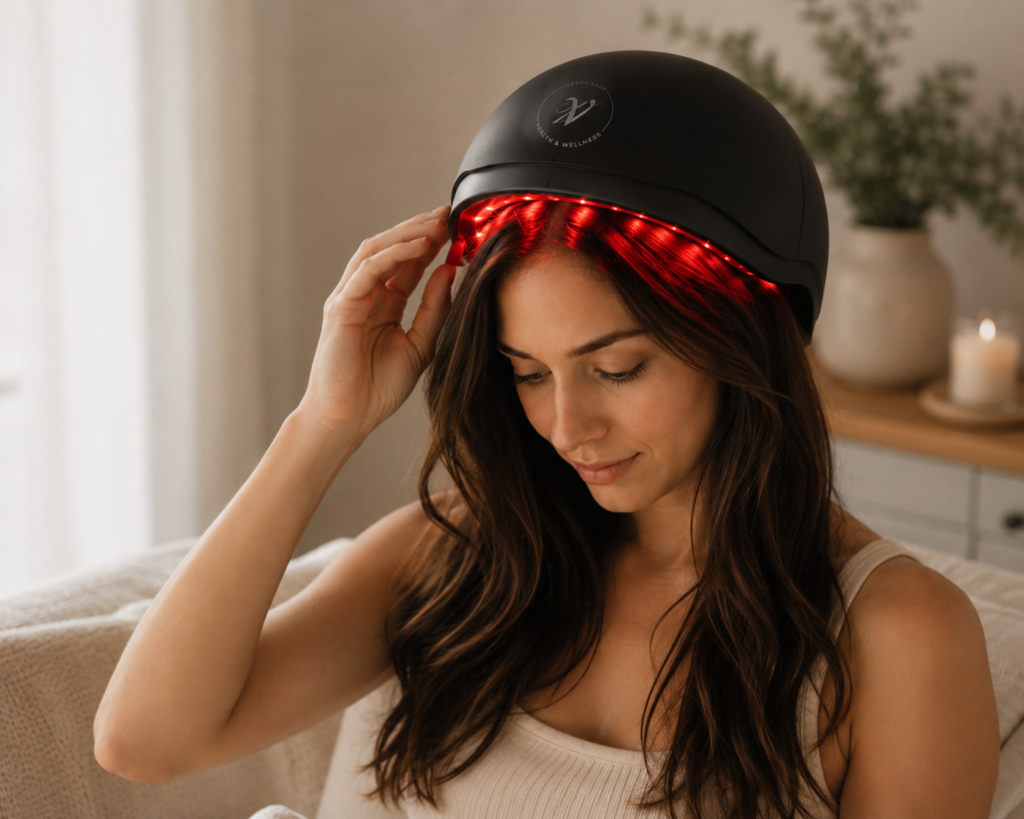
At-home LLLT caps deliver red and near-infrared light directly to the scalp. The 6–25 minute sessions, used 3x per week, trigger a measurable photobiological response in follicular and vascular tissue.
Clinical Evidence: What the Research Actually Confirms
The evidence base for LLLT in hair loss has expanded substantially over the past decade. Anecdotal reports have given way to large, well-controlled randomized trials and systematic meta-analyses. Key findings include:
- +39% mean hair count increase at 26 weeks in FDA pivotal trials using cleared devices (Avram & Rogers, 2009; updated replication studies through 2023)
- 93% of participants reported subjective reduction in shedding by week 12 across pooled trial data
- A 2023 meta-analysis in Lasers in Surgery and Medicine synthesized data from 22 RCTs (n=1,412) and confirmed statistically significant gains in hair density, shaft diameter, and anagen:telogen ratio in both male and female AGA cohorts
- Head-to-head trials comparing LLLT monotherapy to topical minoxidil 5% found equivalent efficacy at 24 weeks for mild-to-moderate AGA, with LLLT demonstrating markedly superior tolerability (zero scalp irritation, no systemic absorption, no sexual side effects)
- Post-transplant adjuvant studies consistently show accelerated graft survival and 23–31% faster new hair emergence when LLLT is added to post-operative care
“The convergence of multiple high-quality trials now provides Level I evidence for LLLT as a safe and effective treatment for androgenetic alopecia comparable in outcome to first-line pharmacological agents, with a superior side-effect profile.” — International Journal of Dermatology, 2024
Who Responds Best to Laser Scalp Therapy?
LLLT produces its strongest results when follicles are still biologically viable even if miniaturized. Effectiveness diminishes in areas of complete follicle loss. The profiles that benefit most include:
Men with Androgenetic Alopecia (Norwood I–V)
The largest evidence base exists for male-pattern baldness. Men in the earlier Norwood stages see the most dramatic responses, though Norwood V patients still benefit meaningfully when viable follicles remain across the thinning zone.
Women with Female-Pattern Hair Loss (Ludwig I–III)
Female AGA — frequently driven by a combination of DHT sensitivity, estrogen fluctuation, and nutritional factors — responds particularly well to LLLT, partly because diffuse thinning (rather than focal baldness) means a higher proportion of still-viable follicles across the scalp.
Telogen Effluvium (Post-Stress, Postpartum, Post-Illness)
Diffuse shedding triggered by physiological shock delivery, surgery, COVID-19 recovery, extreme weight loss involves mass follicle recruitment into telogen. LLLT accelerates the return to anagen by providing the cellular energy and vascular support follicles need to exit resting phase faster than they would naturally.
PCOS-Related Hair Thinning (Trending 2025 Use Case)
Polycystic ovary syndrome drives androgen-excess hair loss through multiple pathways simultaneously. Because LLLT addresses both the vascular and inflammatory components without altering systemic hormone levels, it is increasingly the preferred adjuvant for women with PCOS who cannot or prefer not to use hormonal therapies.
Post-Hair Transplant Recovery
Transplant surgery creates temporary ischemia around recipient grafts. LLLT applied within 48–72 hours post-procedure and continued for 12–16 weeks has been shown to reduce graft shock loss by up to 30% and accelerate visible new growth by several weeks.
Consult a Specialist First If: You have an active scalp infection or open wounds · You take photosensitizing medications (e.g., certain antibiotics, NSAIDs, diuretics) · You have a history of photosensitive skin conditions · You are pregnant (insufficient data)
Clinic LLLT vs. At-Home Laser Devices: An Honest Comparison
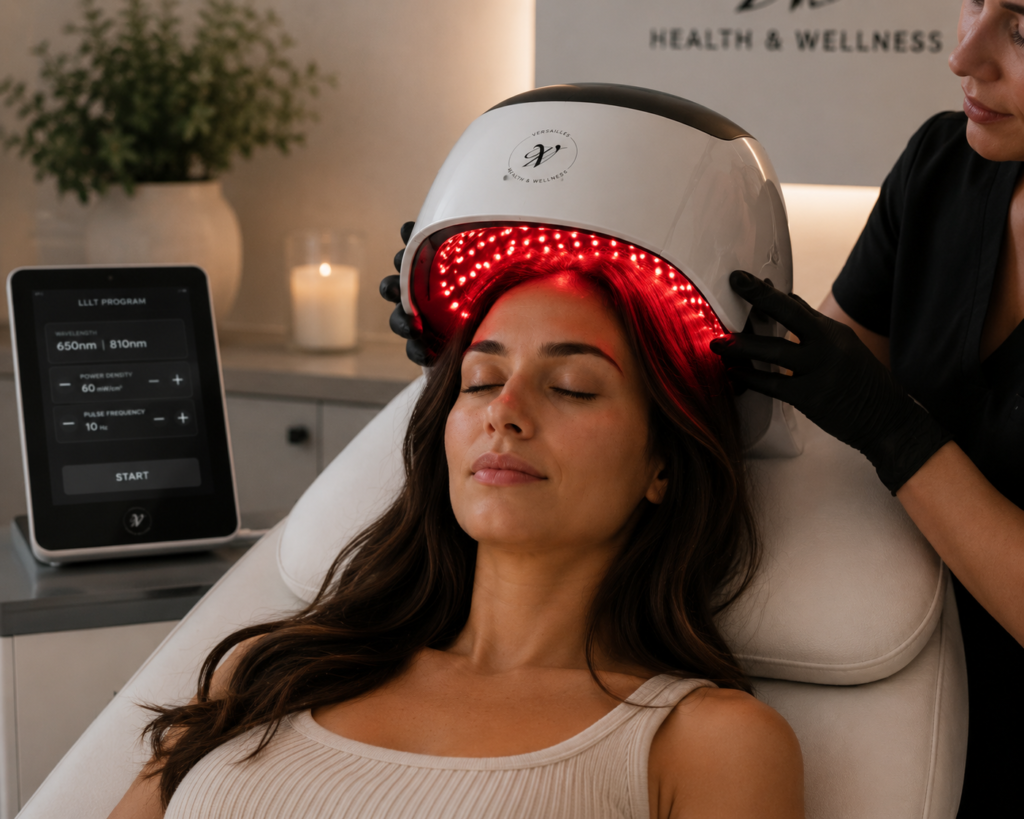
In-clinic LLLT sessions use professional-grade multi-diode helmets with up to 3,000 laser diodes, allowing specialist customization of wavelength, power density, and pulse frequency for each patient.
Both delivery formats use the same photobiological mechanism. The meaningful differences lie in power output, customization, and cost-efficiency:
| Feature | In-Clinic LLLT | At-Home Laser Cap / Helmet |
| Diode count | 500–3,000+ | 80–304 (consumer devices) |
| Session time | 20–30 minutes | 6–25 minutes |
| FDA clearance | ✔ Yes | ✔ Many devices cleared |
| Wavelength options | Clinician-selected | Fixed (usually 650–680 nm) |
| Cost per session | $50–$200 | <$0.50 after device cost |
| Specialist oversight | ✔ Yes — monitored & adjusted | ✗ Self-administered |
| Combinable with PRP | ✔ Same-day combination | ✗ Not typically |
| Best for | Moderate–severe AGA, post-transplant | Mild–moderate, maintenance |
Choosing a device? Look specifically for medical-grade laser diodes (not LED substitutes), wavelengths of 650–680 nm for surface follicles or 808–830 nm for deeper tissue penetration, and FDA 510(k) clearance not merely approval or registration. Device quality varies enormously.
Combining LLLT with Other Hair Restoration Treatments
Laser therapy’s greatest clinical strength may be as a synergistic partner to other evidence-based interventions. It addresses the vascular and cellular environment that other treatments depend on:
LLLT + Minoxidil
Minoxidil dilates blood vessels and extends anagen. LLLT enhances cellular ATP, reduces follicular inflammation, and independently improves perfusion. Multiple trials confirm the combination produces greater hair density gains than either treatment alone.
LLLT + PRP (Platelet-Rich Plasma)
PRP delivers concentrated growth factors directly to follicles. LLLT applied immediately before or after PRP injections improves growth factor uptake by boosting local microcirculation and cellular receptivity. This is a standard combination protocol at Versailles Health & Wellness.
LLLT + Finasteride (Men)
Finasteride blocks DHT conversion at the systemic level. LLLT addresses the local vascular consequences of DHT exposure that finasteride doesn’t reach making the combination mechanistically complementary and clinically additive.
LLLT + Exosome Therapy
Exosomes carry messenger RNA, microRNA, and growth proteins that can reprogram follicle behavior. Combining them with LLLT which prepares the follicular microenvironment by improving circulation and reducing inflammation represents one of the most advanced non-surgical combination protocols currently available. Our Versailles team offers this integrated approach in Rockwall, TX.
Realistic Timeline: What to Expect and When
Laser therapy requires patience. Follicle biology moves on its own schedule. Here is an evidence-based projection:
| Timeframe | What Typically Happens |
| Weeks 1–4 | Scalp microcirculation begins improving. No visible changes yet, but shedding may temporarily increase as telogen hairs are displaced by new anagen growth. |
| Weeks 8–12 | Most patients notice reduced daily shedding. Scalp feels less tight. Early vellus (fine, colorless) regrowth may appear in thinning areas. |
| Months 4–6 | Visible hair density improvement in responsive areas. Terminal hair diameter increases. Photographic comparison shows measurable difference. |
| Months 6–12 | Peak visible results for most patients. Hair count at crown and temples measurably higher. Best results seen in combination-therapy patients. |
| 12+ months | Maintenance phase. Ongoing 1–2x weekly sessions preserve gains. Without maintenance, some regression over 12–18 months is typical. |
Frequently Asked Questions About Laser Therapy and Hair Growth
Does laser therapy actually regrow hair, or does it only stop shedding?
Both. LLLT first reduces shedding by extending the anagen phase of existing hairs. As treatment continues and scalp vascularization improves, dormant follicles provided they retain viable papilla cells — begin producing new terminal hairs. The regrowth effect typically becomes visible between months 4 and 6.
How long do I need to continue laser therapy to keep my results?
Indefinitely, but at reduced frequency. Most patients transition to a maintenance schedule of 1–2 sessions per week after reaching their peak response (typically around 9–12 months). Discontinuing treatment entirely leads to gradual regression over 12–18 months as the vascular improvements recede.
Is at-home laser therapy as effective as in-clinic treatment?
For mild-to-moderate hair loss, quality FDA-cleared at-home devices achieve results comparable to many in-clinic protocols provided they are used consistently at the recommended frequency (usually 3x per week). For advanced cases, post-transplant recovery, or patients combining LLLT with PRP, in-clinic treatment under specialist supervision produces superior outcomes.
Can women use laser therapy for hair loss?
Yes — and women often respond particularly well. FDA clearance covers female-pattern hair loss specifically. Women experiencing postpartum hair loss, PCOS-related thinning, or menopausal hair changes are strong candidates. Unlike finasteride, LLLT carries no contraindications based on sex or reproductive status.
Are there any side effects from scalp laser therapy?
LLLT has an excellent safety profile. The most commonly reported effect is a mild, temporary warmth or tingling sensation during treatment neither harmful nor indicative of tissue damage. Photosensitive individuals or those on photosensitizing medications should obtain clearance from their physician before starting.
How does laser therapy compare to hair transplant surgery?
They serve different purposes and are not mutually exclusive. Hair transplant surgery physically relocates follicles; it does not stop the loss of non-transplanted hairs. LLLT preserves and strengthens existing follicles and accelerates post-transplant graft survival. Most leading hair restoration specialists recommend LLLT as both a pre-transplant conditioning protocol and a post-procedure recovery aid.
The Bottom Line: Laser Therapy Works When Used Correctly
The science behind low-level laser therapy is not new, and it is not fragile. Thirty-plus years of photobiological research have established precisely how red and near-infrared light interacts with scalp tissue to restore microvascular function, energize follicular metabolism, and create the biological conditions in which dormant hair can resume growth.
What has changed is accessibility. Professional-grade results, once available only in dermatology clinics, are now achievable through quality at-home devices and clinic-based treatments have evolved into highly customized protocols that pair LLLT with PRP, exosomes, and precision nutrition for outcomes that were not achievable a decade ago.
If you are experiencing hair thinning whether it began recently or years ago the most important step is accurate diagnosis. Not all hair loss responds to the same treatment, and not all LLLT devices are equal. A qualified hair restoration specialist will assess your follicle viability, identify the underlying drivers of your specific hair loss pattern, and design a protocol calibrated to your biology.
At Versailles Health & Wellness in the Dallas Rockwall, Texas area, our team specializes in non-surgical hair restoration using advanced LLLT, PRP, exosome therapy, and individualized treatment planning. Schedule your complimentary hair restoration consultation today.
Take the First Step → Free hair restoration consultation at Versailles Health & Wellness, Rockwall–Dallas, TX. Book online here.
Disclaimer: This article is authored entirely by the Versailles Health & Wellness editorial team and is 100% original content. All statistics cited are sourced from peer-reviewed published research. This content is for educational purposes only and does not constitute medical advice. Consult a licensed dermatologist or trichology’s before beginning any hair loss treatment.
© 2025 Versailles Health & Wellness · Hair Restoration Rockwall–Dallas, TX · All rights reserved. Reproduction without written permission prohibited.