
Author name: Ashwini Patil

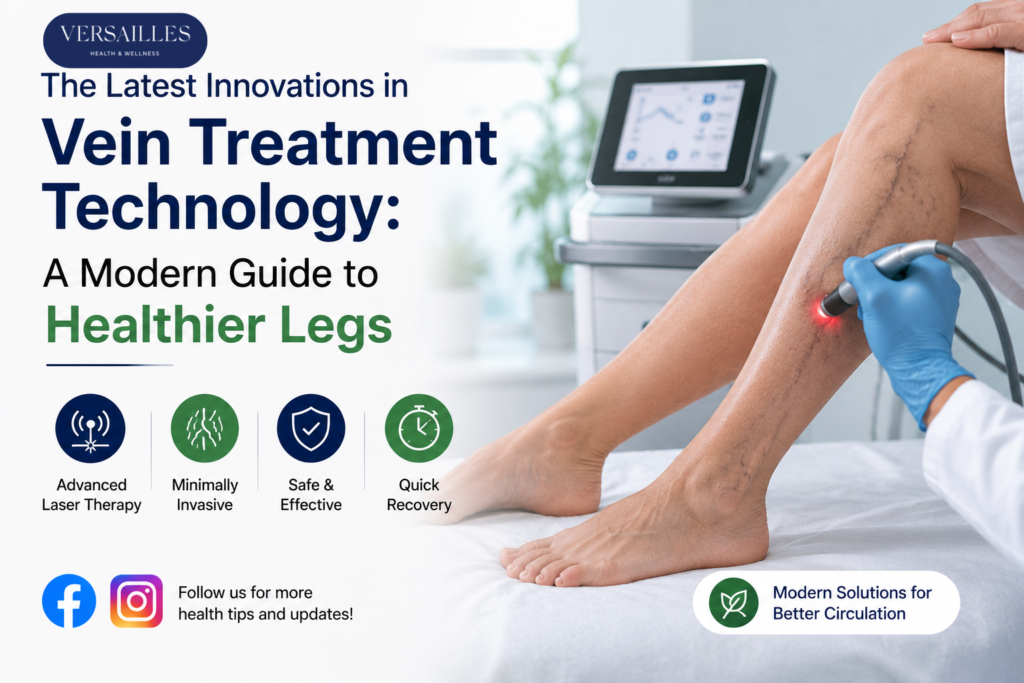
Featured image for blog The latest innovation in vein treatment technology
Uncategorized

The Latest Innovations in Vein Treatment Technology: A Modern Guide to Healthier Legs

Varicose veins, spider veins, chronic venous insufficiency – vein problems affect millions of people the world over. Treatment options were limited, usually invasive, and took decades to recover. But thanks to amazing advances in the medical industry, vein treatment technology is now in a new age that is an age of accuracy, minimal discomfort and faster healing. “Today, patients don’t have to worry about painful surgeries or long downtime. Vein procedures today are faster, safer and much more effective than they’ve ever been.  Understanding Vein Problems: A Quick Overview Before we get into the innovations, it’s important to understand why vein treatments are important. Blood flows to the heart through veins. If the valves in the legs are weak or not working right , blood can pool in the legs . This leads to problems such as: If untreated, vein conditions can worsen and lead to more serious complications such as blood clots or ulcers. Fortunately, there are state of the art solutions available thanks to modern medicine that are light years ahead of the old fashioned vein stripping operation.  1.Endovenous Laser Ablation (EVLA): Illuminated guidance Endovenous laser ablation (EVLA, EVLT – endovenous laser therapy) is one of the most common vein treatments in the contemporary era.   It seals the damaged veins from within with a concentrated beam of laser light.How it works: A small incision is made and a slender laser fibre is inserted into the relevant vein. The heat from the laser causes the vein to collapse, so blood flows through other, healthier veins around it. Why it is a revolution: It is a good alternative to traditional surgery for patients .  2. Radiofrequency ablation (RFA) – heat treatment  A further revolutionary technique is the use of Radiofrequency Ablation. It uses controlled radiofrequency energy to seal off the diseased veins instead of laser light. How it works: A small catheter is threaded into the vein that delivers radio frequency waves that heat up and collapse the walls of the vein. In time the body will slowly reabsorb the closed vein. Key benefits: RFA is especially well suited for patients who desire a gentle, yet very effective treatment with minimal downtime.  3. VenaSeal Closure System: The Glue That Changes Everything One of the most exciting new advances in vein care is the VenaSeal Closure System, which uses a special medical adhesive to seal faulty veins – no heat, no needles, no compression stockings required. How does it work ? A small catheter is placed in the vein and a medical grade glue is injected through the catheter. The glue seals the vein shut so blood can go through healthier veins. What patients love? VenaSeal is the future of vein treatment – a technique that provides comfort, efficiency and great clinical results.  4. The Hybrid: ClariVein (Mechanical and Chemical Ablation) ClariVein is a new technology combining mechanical and chemical techniques to treat varicose veins. It’s known to be gentle, fast and efficient. How Does It Work?A catheter is inserted into the spinning vein. It rotates, slightly injuring the lining of the vein, and injects a sclerosing solution that closes the vein. ClariVein Advantages: ClariVein’s two-pronged approach makes it an excellent choice for patients who are looking for comfort without sacrificing results.  5. Foam for sclerotherapy Sclerotherapy has been used for years but with new advances especially with the new introduction of the foam sclerotherapy it is more effective than ever . How does it work? The doctor injects a sclerosing agent into the vein involved, causing it to collapse and disappear gradually. Why foam sclerotherapy is so special: Foam sclerotherapy is a common treatment for cosmetic and medical vein problems and results are visible within weeks.  6. Ultrasound-Guided Procedures: The Gold Standard of Accuracy Vein care has been transformed by high-resolution ultrasound imaging used in procedures. Doctors can treat veins and see them in real-time with pinpoint accuracy.  The advantages are: In today’s world, ultrasound guidance makes almost every vein procedure safer and more successful.  7. AI and intelligent diagnostic tools Doctors are turning to artificial intelligence in the field of vein care to diagnose conditions earlier and more accurately. AI imaging tools can help catch small abnormalities in veins that might be missed by the naked eye. Prediction:  AI continues to evolve and vein clinics are becoming more efficient, data-driven and patient-centric.  8. Compression Therapy High Tech Treatments like compression stockings, which are old-school, have had a 21st century face-lift. Today’s smart compression wear uses high-tech fabrics, pressure gradients and even built-in sensors to monitor blood flow. The modern compression therapy is based on: These innovations are designed to assist in the daily care of veins and to make it more efficient for long-term care.  The Importance of These Innovations The patient experience has evolved with changes in vein treatment technology. “Procedures that once required hospitalisation and weeks of recovery can now be done in less than an hour with little to no downtime.  Patients get: If you suffer from painful varicose veins, or simply want to improve the look of spider veins, today’s treatments can safely and comfortably provide permanent solutions.  Selecting the Appropriate Vein Treatment Every patient is different. Treatment depends on the size, location, severity and overall health of the veins. Consulting a qualified vein specialist is the best way to determine the right course of action. A good vein clinic will provide: Final Thoughts The world of advanced vein treatment has come a long way, from invasive surgeries to sophisticated, minimally invasive techniques that focus on patient comfort and long-term well-being. Innovations such as EVLA, RFA, VenaSeal, ClariVein and AI-driven diagnostics are transforming vascular care. If you have had problems with veins this is the perfect time to have treatment. Thanks to modern technology, vein care is safer, faster and more effective than ever before, helping patients walk into a healthier, more confident future. Better circulation for healthier veins and legs, better quality of life. It is easier than you might think to do

Featured Image for Blog Weight Loss & Hormone Therapy
Uncategorized

Hormones & Weight Gain: The Hidden Link Explained

You eat well. You keep moving. And yet the scale just won’t move or, worse, keeps creeping up. Before you blame your willpower, look at something deeper. Your hormones. One of the most frustrating things a person can go through is gaining weight, especially when it seems to happen in spite of honest effort. The old story – eat less, move more – is strictly true, but dangerously incomplete. What it does not include is the invisible orchestra of chemical messengers that run quietly in the background: hormones These little guys control everything from hunger levels to fat storage in the body, and when they’re out of whack, it can feel like an uphill battle even for the healthiest lifestyle. It’s not an excuse, it’s about understanding the hormonal side of weight gain. It’s about getting to the real answer. What do hormones have to do with weight? Glands all over your body produce hormones – thyroid, adrenal glands, pancreas, ovaries, testes and more. They go around the blood stream telling the organs and tissues what to do. Several hormones are particularly powerful when it comes to body weight loss clinic Rockwall TX. Think of these hormones as traffic controllers. When they’re all working together, the system functions like a finely tuned machine: You get hungry when your body actually needs fuel, content when you’ve eaten enough, and your metabolism hums along at a healthy pace. But if one signal goes awry, the whole network can come to a halt. The trouble comes when insulin levels are chronically high. This occurs with diets high in refined carbohydrates and sugar, leading to repeated blood sugar spikes. Eventually, cells may become resistant to the signal of insulin, so the pancreas produces even more. This condition – insulin resistance – is a primary cause of both Type 2 diabetes and unexplained weight gain, especially in the midsection. The answer isn’t necessarily to eat less. It’s to eat smarter. “Cutting back on refined sugars, eating more fibre and having balanced meals that don’t cause a big spike in blood sugar can help you regain insulin sensitivity over time.” Cortisol: When Stress Turns to FatThe body’s main stress hormone is cortisol, which is released from the adrenal glands when the body senses danger. It’s very useful for short bursts – it focuses you, gives you a burst of energy and gets you ready to go. The problem is that modern life keeps the stress response on far too often. Chronically high cortisol tells your body to conserve energy stores, a survival mechanism from the days when stress meant real physical danger and food was less available. It encourages fat storage in the visceral area (your organs and midsection), increases appetite and causes cravings for calorie-dense, high-fat, high-sugar foods. Research has repeatedly found that high levels of cortisol are associated with a high body mass index. Stress management isn’t a luxury – for many people with weight problems, it’s a medical necessity. Enough sleep, mindfulness, regular movement, and social connection all help to bring cortisol back down to manageable levels. The thyroid gland: Your metabolic thermostatThe thyroid gland is a small butterfly-shaped gland in your neck that produces hormones (T3 and T4) that control the rate at which your body burns energy. With a healthy thyroid , your metabolism is functioning properly . A sluggish thyroid, called hypothyroidism, puts the brakes on everything. Hypothyroidism causes people to gain weight unexpectedly, feel constantly tired, cold, lose hair and just feel generally unenergetic which no amount of sleep fixes. That’s because when thyroid hormone production declines, the body’s baseline calorie-burning rate drops, making weight gain nearly inevitable without intervention. Hypothyroidism is much more common than most people think, affecting an estimated 1 in 20 people to varying degrees – and is much more common in women. It can be diagnosed with a simple blood test and is usually treated very successfully with thyroid hormone replacement therapy Dallas TX. Leptin and ghrelin: the hunger twinsLeptin is your satiety signal, produced by fat cells to tell your brain when you’ve had enough. Ghrelin, meanwhile, is produced in the stomach and triggers hunger. Ideally, the two work in concert, with ghrelin rising before a meal to stimulate eating and leptin rising after to signal satiety. Connect sex hormones with weightOestrogen, progesterone and testosterone have also a strong influence on body composition. In women, hormonal changes during perimenopause and menopause, especially a drop in oestrogen, are often linked to increased fat storage around the waist, regardless of diet and exercise routine. As men get older, their testosterone levels go down. This may cause them to lose muscle mass and store more fat. These changes don’t mean you’ll gain weight as you age, but they do mean you may need to change the way you approach it. It is especially important to build and maintain muscle mass, which is metabolically active and can help counteract the slowdown that hormonal changes can cause. The big pictureWeight isn’t just a matter of calories in versus calories out – it never really was. Hormones are the intersection of metabolism, appetite, stress, sleep and ageing and when they are out of sync, even the most disciplined effort can produce disappointing results. The good news is that hormonal health is responsive to the same fundamentals that support overall wellbeing: quality sleep, nourishing food, movement, stress management and professional guidance when something deeper is going on. If you’re struggling with your weight and feel like you’re doing everything right, maybe it’s time to look not just at what you’re eating — but at what your hormone replacement therapy  at Dallas TX are telling your body to do with it.

Scroll to Top